What to Do for an Abscess Tooth in a Dog
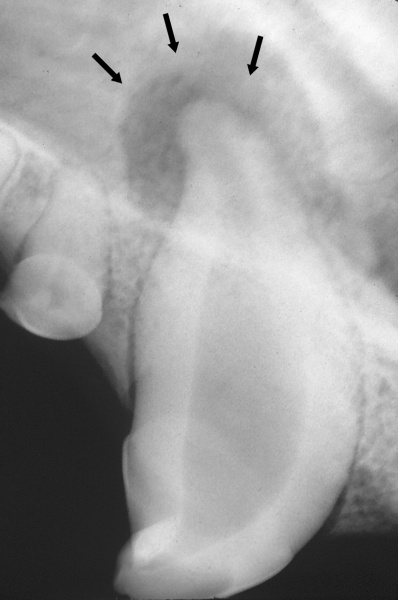 What is a tooth root abscess?
A molar root abscess is a severe infection that develops around the root of a tooth. It usually occurs as a result of bacteria entering through a broken or traumatized tooth.
What causes a tooth root abscess?
A tooth root abscess forms when bacteria enter the exposed root culvert of the tooth. The crown of a good for you tooth is covered by enamel. Enamel is essentially impervious, preventing bacteria from inbound into the tooth. Beneath the enamel is a different dental hard tissue known as dentin. Dentin contains approximately 300-400,000 small openings (tubules) that communicate with the center of the tooth. In the center of the tooth is the pulp cavity which contains the soft tissue (blood vessels, nervus, and lymphatic tissue). The tissue in the lurid cavity is collectively referred to as the pulp. The pulp nurtures the normal tooth.
"A tooth root abscess forms when bacteria enter the exposed root canal of the tooth."
If the protective molar enamel is chipped, thereby exposing underlying dentin or the molar is fractured more than deeply exposing the lurid, bacteria can gain access to the centre of the tooth. In dogs, molar fractures well-nigh often occur as a result of chewing on hard things such equally bone, crate bars, antlers, ice cubes, moo-cow or pig hooves, or hard nylon toys.
One time infected with leaner, the pulp tissue becomes inflamed (pulpitis) and eventually the molar dies (lurid necrosis). Inflammatory products produced past the bacteria and dying lurid tissue leak out of the lesser of the root (root apex) and infection now contaminates the bone surrounding the root resulting in apical periodontitis. A persistent infection can issue in an abscess (an accumulation of pus) that may leak direct into the oral crenel or may leak out onto the skin (beneath the chin if the affected root is in the lower jaw or onto the face if the affected root is that of an upper tooth). Pulpitis, upmost periodontitis, and tooth root abscessation can be very painful.
A tooth root abscess may also occur secondary to periodontal affliction. In this scenario, the infection does not travel down to the bone through the center of the tooth, just rather tracks along the exterior of the tooth through the supportive tissues that surround the root.
What is the most mutual location for a tooth root abscess in dogs?
Any tooth tin can fracture; however, the well-nigh commonly fractured teeth are the canine teeth (two in the upper jaw and 2 in the lower jaw) along with the maxillary 4th premolars (the largest premolar tooth in the upper jaw) and the mandibular beginning tooth (the largest molar in the lower jaw).
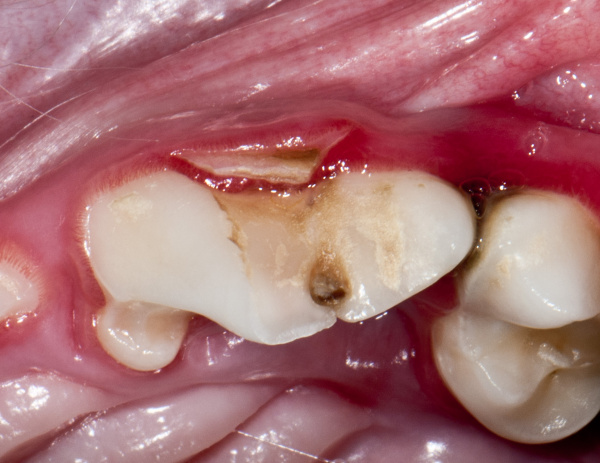 What is a slab fracture?
A slab fracture develops when a canis familiaris's cheek teeth bites downwards onto a hard object, at but the right angle and force, breaking off a portion of the tooth surface, exposing the underlying sensitive dentin and peradventure even the pulp. The slab that breaks off may be a small chip or a large piece of the tooth and the fractured portion may extend below the mucilage (gingiva) onto the root surface.
Are there any obvious symptoms when a domestic dog has a molar root abscess?
Abscessed teeth are very painful, merely dogs may not testify obvious signs of pain. Instead, your domestic dog may be reluctant to chew on his toys or may pull away when his head is touched. An observant owner may notice that their dog is only eating or chewing on i side of the oral cavity or is dropping food when eating.
Some dogs will have bad breath while others volition paw at the affected side of their face or rub their confront along the ground. Pet owners may erroneously assume their pet simply has an itch, merely the beliefs may be an indication of an abscessed tooth.
If the abscessed tooth is the upper fourth premolar or start molar tooth, the outward signs are often mistaken for some other problems, such as an eye infection or a puncture wound. This happens because these tooth roots lie only below the eye, and when they become abscessed the infection quickly spreads to the surrounding tissues. The tissue below the heart will ordinarily become swollen and inflamed just before the abscess bursts. If you wait inside the dog's oral cavity, there volition frequently be swelling and redness on the gums around the affected tooth. If swelling and infection has extended behind the eye your pet may react with a painful response if you attempt to open his oral fissure.
How is a tooth root abscess diagnosed?
There is a high degree of suspicion for a tooth root abscess when at that place is a draining tract onto the face, beneath the chin or into the oral cavity. However, intraoral dental radiographs (X-rays) are required to definitively diagnose a tooth root abscess.
What is the treatment for a tooth root abscess?
A tooth root abscess is a very painful condition and needs to be treated as shortly as possible. Antibiotics will be prescribed to command the infection and either an anti-inflammatory and/or hurting relief medication will also exist prescribed. Although this medical treatment will deal with the symptoms, it will not treat the underlying molar injury and antibiotics alone volition non cure a tooth root abscess.
"A molar root abscess is a very painful condition and needs to be treated as before long as possible."
There are only 2 options for treatment of an abscessed tooth. Ane option is root canal therapy (endodontic handling), which can preserve the construction of the tooth. The other choice is extraction. 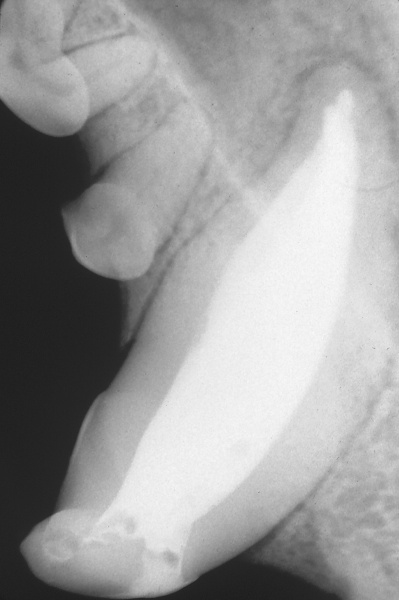
It is necessary that the molar root in question be assessed clinically and via radiographs to decide if your dog is a good candidate for root canal handling. The extent of trauma to the crown of the tooth, pre-existing infection (os devastation around the root), along with the overall periodontal health of the tooth volition touch on whether a recommendation is made for root canal handling or extraction. Root canal therapy should be rechecked with intraoral radiographs (requiring a brief general anesthetic) 3-half-dozen months after the initial handling and annually for the adjacent couple of years.
Your veterinarian will exist in the best position to recommend the appropriate option for your domestic dog, depending on the severity of the abscess and the degree of damage to the tooth and surrounding structures. Almost veterinarians will refer these complex cases to a veterinary dental specialist for cess and treatment (avdc.org).
Post-operatively, regardless of which handling option is followed, antibiotics may be prescribed. Handling for pain (anti-inflammatory and/or pain medication) will be prescribed. Your domestic dog may or may non crave a change in diet during the postal service-operative recovery flow. One time the surgical extraction site has healed, virtually dogs can resume their regular diet and activeness level.
All dogs should take a dental examination performed by their veterinarian at to the lowest degree every six months. For a dog that has previously developed a tooth root abscess, your veterinary may recommend more frequent dental examinations.
fieldswormuch1985.blogspot.com
Source: https://vcahospitals.com/know-your-pet/tooth-root-abscess-in-dogs
Posting Komentar untuk "What to Do for an Abscess Tooth in a Dog"